18 August 2020

Tatis' Grand Slam, and Writing about Unwritten Rules


Hoo-boy...

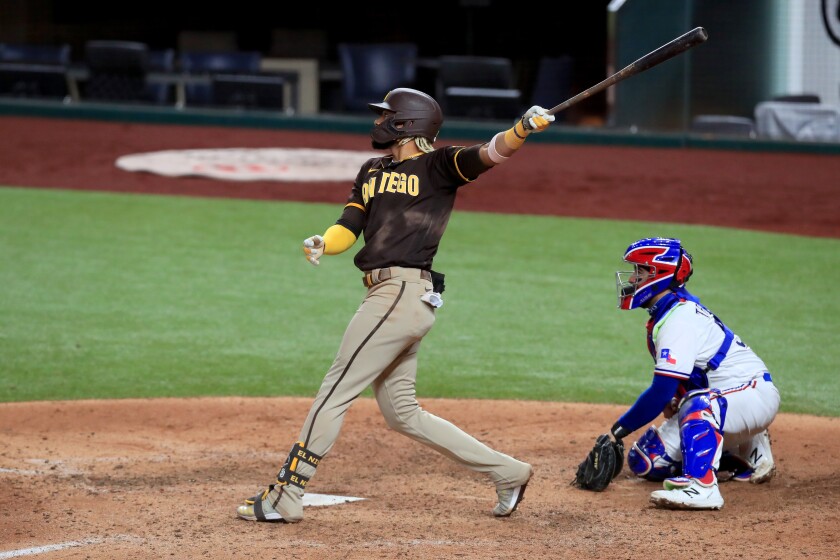
I dunno if y'all heard about this one, but Fernando Tatis hit two homers! The second one when his team was already leading by quite a little piece! A lot of people were really upset about this, apparently. Fernando Tatis owes the pitcher an apology! The nerve! Hitting a grand slam - his second homer of the game! - when his team already had a significant lead! How *dare* he??


Oh, wait, No, not last night.


*This* game, from 1999.


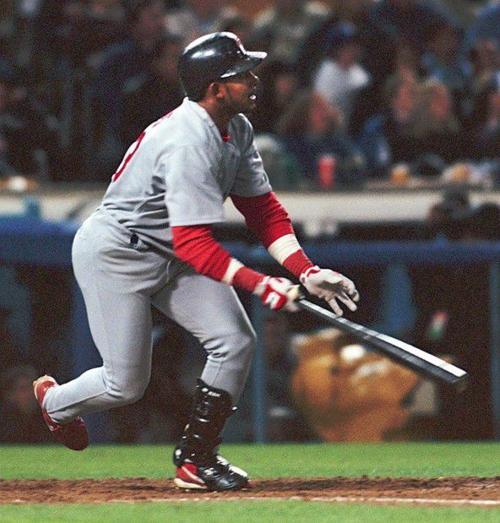
In that game, Fernando Tatis SENIOR hit two homers, actually two grand slams, IN THE SAME INNING, both off Chan Ho Park of the Dodgers. In Sr.'s case, they had a 7-2 lead in the third inning - due largely to his first grand slam of the inning - and would go on to win 12-5.


Actually, now that I think of it, nobody told him he should have laid down and coasted after that first homer. MLB actually celebrates it! Someone writes a story and shows the video every year on the anniversary. Sure, it was a smaller lead, earlier in the game, and he swung at a 3-2 pitch (his first one came on a 2-0 pitch), but still. The parallel is there at some level.


OK, it's weak, I admit, but I'm trying to make a point here:


Fernando Tatis The First had easily his best season in 1999. In January, his son was born, which was probably pretty exciting. After floundering with the Rangers for a couple of seasons, he'd been traded to the Cardinals at the deadline in 1998 and played well enough down the stretch and in spring training in 1999 to win the starting 3B job outright.  


He rewarded the team by hitting homers in each of his first three games that year, and he continued to hit. The two-grand-slam game was bracketed by games with homers before and after, and by early May his average was over .300, and he was on a 66-homer, 192 RBI pace. Obviously he cooled down after that, but overall, he would hit .298 with 34 homers, 104 Runs and 107 RBI as a 24-year old. He even stole 21 bases and walked 82 times!


All would turn out to be career highs, as he was never fully healthy again. Sad face.


He played only parts of the next four seasons, hitting just 37 homers *total* from 2000 to 2003, then missed two whole years, then played a few games with the 4th place Orioles in 2006, then missed all of 2007, and then caught on as a part timer with some forgettable Mets teams (...or anyway I had forgotten them.) in the late 2000s. He won the dreaded Sporting News Comeback Player of the Year award in 2008, but even at that, he hit 11 homers in 92 games and was already 33 years old. His star had passed.


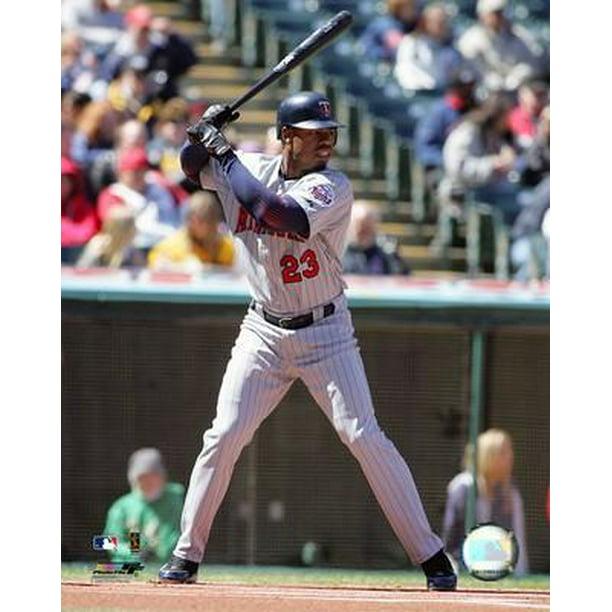
In short, Fernando Tatis The Younger should hit 'em while he can. Life is too short. Baseball careers are too short. For every Ken Griffey or Barry Bonds, a good player whose son would turn out to be one of the all-time greats, there are probably a dozen Tim Raines Jrs and Josh Barfields and Sean Burroughs and Kyle Drabeks who never make much of a mark in the majors, despite the accomplishments of their parents.  Tatis and Vlad Guerrero Jr. and Bo Bichette all look like wonderful young players, the future of MLB. All three have already spend time on the injured list. Anything can happen.


The real problem with these unwritten rules comes out in the quote from Rangers' manager Chris Woodward: 

“I think there’s a lot of unwritten rules that are constantly being challenged in today’s game. I didn’t like it, personally. You’re up by seven in the eighth inning; it’s typically not a good time to swing 3-0. It’s kind of the way we were all raised in the game.”


Except we were not all raised that way.  Apparently in Woodward's home territory in Southern California, and for that matter in Padres' manager Jayce Tingler's original stomping grounds in Missouri, maybe kids are raised not to ever swing at a 3-0 pitch. Even when it looks like a meatball and you've got the bases loaded. Or not to try to hit homers when your team is already winning by several runs.  

Kids in Latin America aren't raised that way. Those cultures tend to be a little less stuffy, a little less concerned about showing each other up. People get that it's a game, and that they're playing ball for a living, and that it's OK to find that exciting. The alternative for so many of them is destitute poverty, so why not get a little psyched if you've found a way out of that??


But suburban American white kids often have it drilled into their heads that they should be calm and dignified and that they should not show up the opposition and that they should "act like they've been there before" even if they haven't. You hit your homer and keep your head down and trot around the bases - not too slow, not too fast - or he'll drill you (or worse yet, your teammate) in retaliation.


Well, Tatis hasn't been there before, and he wasn't "raised in the game" that way. (Plus, apparently he missed the "take" sign. :-/ ) He's 21, and he'd never hit a grand slam in the majors before. He'd never homered on a 3-0 pitch before. When you're that young, it's all new, and when you're that talented, you should be allowed to explore the depths of that talent.


Not for his sake, or anyway not just for his sake, but for ours. The fans. We're the whole reason he's here, he has this job to entertain us. And we want some damn excitement once in a while! This friggin' pandemic is hard enough on all of us without having to suffer through watching a talented youngster take a get-me-over fastball down the pipe on 3-0 with the bases loaded. Take a chance and enjoy it while you can! 

And let us enjoy it a little too.


Stumble Upon Toolbar

12 August 2020

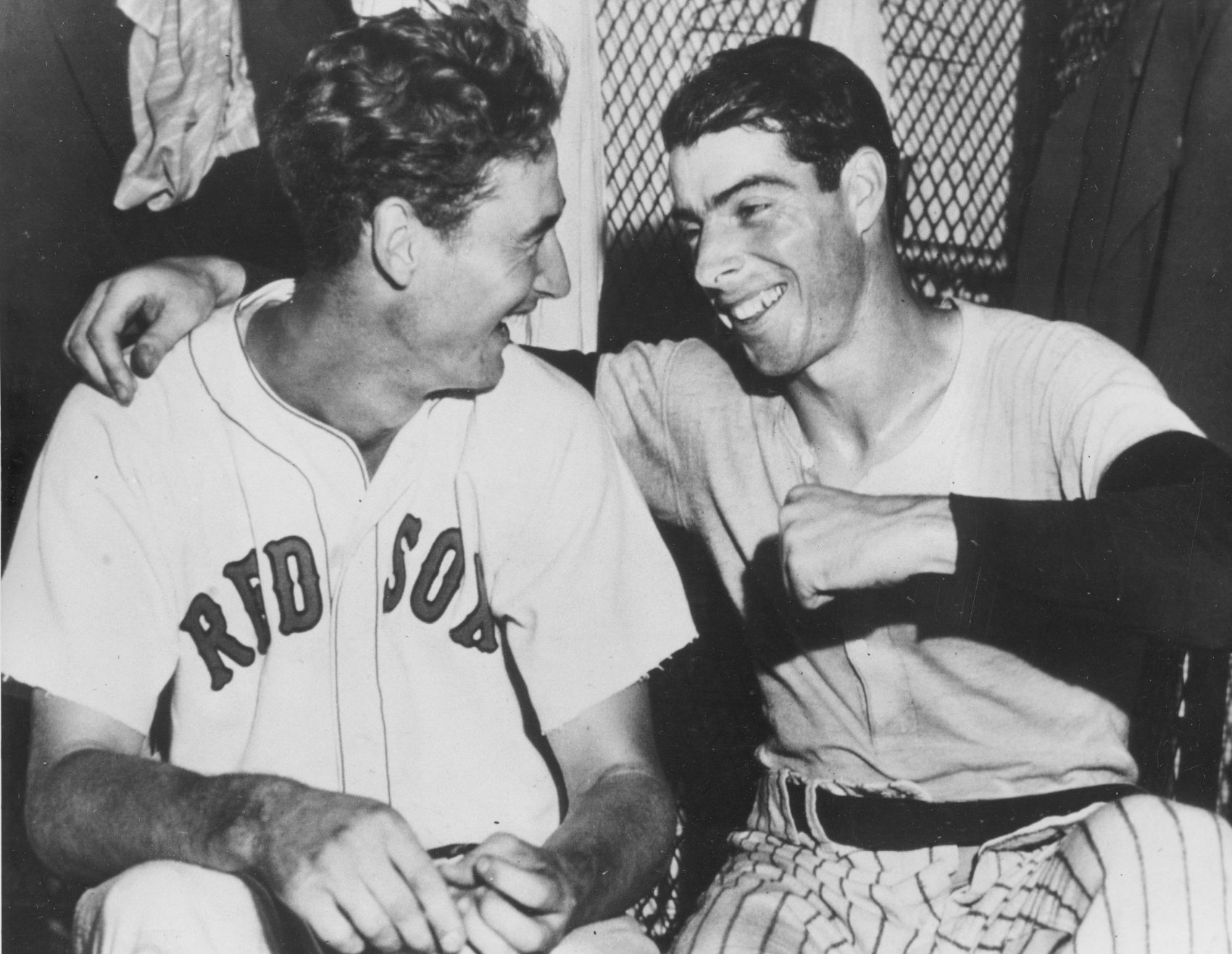
What the DiMaggio-Williams Rivalry Can Teach us About Modern MVP Voting...

Welp, here I am again, going down another JoePos rabbit hole...

Today's baseball-in-the-time -of-COVID essay details the inexplicable way in which Ted Williams managed to win his second Triple Crown in 1947 but lose the MVP by one point to Joe DiMaggio.  Posnanski attributes it to the fact that the Yankees won their division by a dozen games and the writers did not often vote for players who were not on pennant winners or at least serious contenders in those days, not for first place in the MVP running, anyway.  


He blames, perhaps rightly, the three first-place votes for the resurgent firstbaseman, George McQuinn, who had been released by the Philadelphia Athletics a year before but hit over .300 for the Yankees as they won the AL pennant running away.  McQuinn was out of MLB a year later after hitting just .248, but in the mean time it looked an awful lot like McQuinn was the reason they won.  


Personally, I thought the seven first place votes given to Yankees super-reliever Joe Page had more to do with it than that, but in any case, The Kid Lost and the Yankee Clipper won, and that was that.  

However, this McQuinn "correlation = causality" argument reminds me of the 2003 AL MVP vote.  Shannon Stewart got traded to the Twins for Bobby Kielty and a PTBNL at the All Star break.  They were 44-49 at the time, but they went 46-23 in the second half, the best record in baseball.  Stewart hit .322 with 6 homers and 38 RBI (2.6 bWAR), which made it seem like Stewart was the reason they were winning.  


In reality, the team as a whole hit almost exactly as well in the second half (779 OPS) as they had in the first (768), even though Stewart himself was markedly better than the guy he largely replaced in the lineup, Bobby Kielty, had been.  The lineup did average almost 5.4 runs per game after the break, compared to 4.6 before, but that must have been due to the timeliness of their hitting more than its overall quality.  

In fact it was the pitching staff that got its act together in the second half, pitching to a 3.96 ERA, compared to the 4.74 they had racked up before the break.  In particular Brad Radke and Kenny Rogers both pitched notably better, and Johan Santana just pitched more, as the Twins finally realized tat he should be starting every 5th day.  

At around the same time, the White Sox traded for Carl Everett, another outfielder who really picked up his game after being traded.  He hit .301 with 10 homers and 41 RBIs (2.0 bWAR) for the Pale Hose, and Chicago went 41-27 in the second half, after playing 5 games under .500 in the first half.  Simultaneously, the first-place, 51-41 Royals (!) went back in the tank for the second half (32-38) and fell to third.  

And for what it's worth, at around the same time the Blue Jays, who had traded Stewart away, also played better in the second half.  Using the same logic, then, this would suggest that Stewart's absence was the reason the Jays started winning, which is only slightly more silly a suggestion than the previous one.  

In any case, Everett didn't get a single MVP vote of any kind (nor, for that matter, did Bobby Kielty), while Stewart got three first place votes and finished 4th overall!  So, what gives?  

Well, there were two things at play here:

  1. The Twins ended up winning their division by four games over the White Sox.  In particular, they went 5-2 against Chicago in September, in the heat of the pennant race, including a three-game sweep at home that was part of an 11-game winning streak which effectively put the last nail in the coffin for the ChiSox.  They went from two games behind Chicago on September 9th, after losing to the White Sox twice in a row, to 3.5 games up on Chicago on September 18th, after that sweep.  So the optics were there, the Twins literally overtaking the White Sox down the stretch, even if Stewart himself didn't especially do anything remarkable in those particular games or in the pennant drive in particular (he hit .289 with zero homers in September).    
  2. Jayson Stark, senior baseball writer on ESPN.com and regular contributor to ESPN's various online and cable TV products, such as SportsCenter and Mike & Mike in the Morning, was lobbying hard for Stewart to get the MVP.  

Admittedly, others made this argument as well (Mark Sheldon from MLB.com, Jim Souhan of the Minneapolis Star-Tribune, who may have had a bit of a home bias) but none with as large an audience or as much clout in the world of baseball journalism as Stark. Stark has made something of a career of finding interesting looking numbers in baseball and writing about them, but of course just because they're interesting - or more to the point, just because they correlate with winning - does not necessarily mean they're meaningful or causal.  

My favorite, which I learned about in Psychology I as a freshman at Lehigh, is the Superbowl indicator.  From 1967-1997, the conference that won the SuperBowl correlated at 90% with the way the Dow Jones finished, though there is really no good causal explanation for this.  My psych professor used it to remind us that correlation never implies causality, an expression he repeated so often that I can still hear his voice in my head as I type it out, now almost 27 years later.  

Likewise, there is no more reason to believe that McQuinn deserved all the credit for the success of the 1947 Yankees than that Stewart deserved it for the 1997 Twins.  Or that the Superbowl conference winner deserves credit for the stock market finishing up (or down).  But it's an easy case to make, and harder to disprove when the optics seem to support it.  

In 1947, nobody had the kind of audience that Stark did in 2003, but writers like Dick Young or Jimmy Cannon probably had wider readership than just about anybody else out there, writing for the New York papers, and may have advocated for McQuinn's votes with their fellow writers as well as their readers.  

We'll probably never know, exactly.  But it's interesting to consider how these decisions may have been made.  None of them occurs in a vacuum, and the modern day decision makers (if indeed 2003 can even be considered "modern day" anymore) are not immune to the same kinds of flawed lines of logic.   

Stumble Upon Toolbar

30 July 2020

Missing the Markakis in the Quest for 3,000

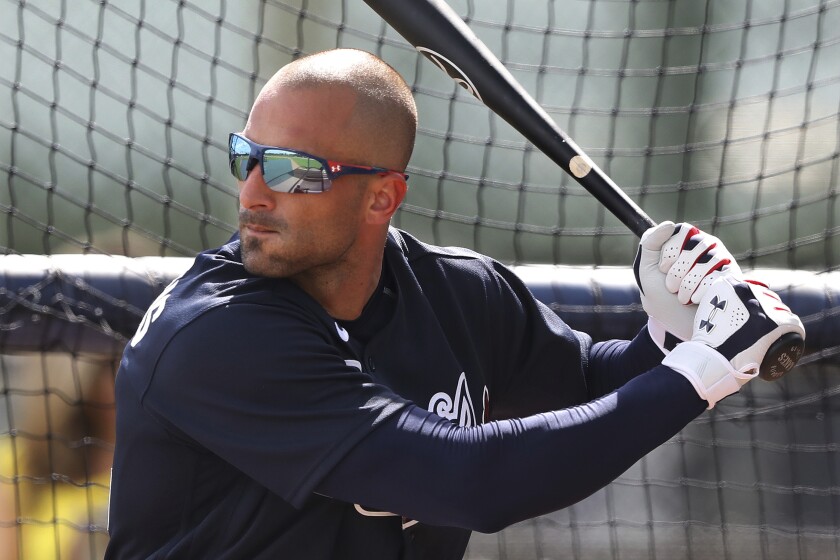
The news today that Nick Markakis is to rejoin the Braves, having changed his mind about opting out due to concerns over COVID-19 reminded me of this article I read on MLB.com more than two years ago, in which the possibility of Markakis eventually getting to 3,000 career hits was discussed.  That article was inspired by another one from the Sporting News, which I did not read at the time.

But I read the first one with interest because Joe Posnanski wrote it, and he's like, my hero and stuff, and because it was on the official website of Major League Baseball.  If MLB says it, well, it must be worth considering!  Joe apparently either read the article in TSN on his own or was alerted to it by an editor who asked him to run with the theme of whether Markakis had a real shot at the 3,000 hit club.

The theory, at the time, basically went like this:


  • Markakis already had over 2,000 hits, and was "only" 34 years old.
  • Markakis was off to a really hot start (hitting .336 with walks and power when the article was posted online).  
  • Other players in the 3,000-hit club (Rickey, Raffy, Winfield, Biggio) were actually behind Markakis' hit-pace at that age
  • Markakis plays almost every day, so he doesn't have to be awesome to get his hits.  


The other factor, possibly, was that the original article was written by a Braves' homer with a deadline to meet.  Dave Jordan wrote that article for TSN, but I can't find anything else he's ever written for them.  He appears to have covered sports for the Brunswick (GA) News in 2015, but not since then.  His Facebook page says he did the same for the Chatsworth (GA) Times, but it is not clear when or for how long.  He appears to be now retired, though he still comments frequently on Georgia sports issues.  Old habits die hard, I guess.

The article itself is full of the kinds of meaningless tidbits you tend to see in local sports pages from home-friendly writers, quasi-analysis to justify his take (focused mostly on Markakis' durability and seemingly favorable comparisons).  That, and quotes from his manager or hitting coach about how "driven" he is or how he "never lets off the pedal", and from the player himself about how he tries not to over think things and to takes it one day at a time.


Posnanski's take on it was a little more nuanced, a little more guarded, though he exaggerated a bit:

Then Markakis settled into being, well, the sort that scouts will call "a professional ballplayer." They're all professionals, if you want to be technical about it, but Markakis was one of those guys who went out there every day and, without fanfare, without flash, without fail, just did his job. He hit around .300. You could count on him for 40-plus doubles and 20 or so homers. He played a solid outfield. One year he led the league in sacrifice flies.

Markakis was the kind of guy who would lead the league in sacrifice flies.


In reality, Markakis had not hit 20 homers in a decade by then, and had not hit 40 doubles since 2010 (though he would end up hitting 43 in 2018). The problem with saying that a player does his job "without fanfare, without flash" is that while the phrase implies that you won't see the kind of antics you see from the likes of Wille Mays Hayes, what we really mean is that the player is not excellent at anything.

He hits for a decent average.  He has modest power.  He doesn't make mistakes on the basepaths (indeed, because he rarely takes chances).  He plays solid (or serviceable) defense.  The top comps for Markakis include the likes of Buddy Bell, Cesar Cedeno, Al Oliver, and Bill Buckner.  Guys who you might describe as "pretty good for a long time" and not a whole lot more.  There are worse things to be described as than "workmanlike" but it rarely gets you to the Hall of Fame, and anyway those guys tend to peter out by age 37 or so.

Speaking of comparisons, Pos compared Markakis to the eerily similar Johnny Damon at that age.  Their numbers were nearly identical at the time, and Damon would go on to have four more productive seasons after age 33.

Then, he just disappeared.

Damon hit .222 in 61 games in 2012 and was released by Cleveland, never to play again.  He was, and will likely forever remain, 231 hits shy of 3,000 and an all-but-certain Hall of Fame election.  As it was, when his name first appeared on the ballot, he got 1.9% of the vote and was removed from the running, probably forever.  The fact that he ranks 330 (!) players better in career bWAR than recent Cooperstown inductee Harold Baines is unlikely to help him much. 

Posnanski cited Bill James' Favorite Toy, his milestone prediction tool, which at the time gave Markakis a 28% chance of reaching 3,000 hits.  That sounds about right, maybe even a little high.  Certainly not as optimistic as Dave Jordan seemed to be.  Posnanski talked about how Markakis would need to have a really incredible career from there on out to have a real shot at it, a Raul-Ibanez-kind of second half (or latter third) of his career, which of course are few and far between.   

For what's it's worth, I really did not buy it at the time, but the take looks particularly bad now, more than two years later.  Why?  Well, for one thing, latter-half careers like the one Ibanez had don't come around very often.  It appears that Ibanez was probably better than the Mariners realized at the time (also he was a disaster on defense), so they kept running a cavalcade of former stars out to left field instead of giving Ibanez a real shot:  Rich Amaral, Rickey Henderson, Brian Hunter, Glenallen Hill.  Finally Ibanez became a free agent and signed with the Royals, for whom "disaster" was just one of many typical adjectives to describe them, so why not!  He hit well in his first season (though he did not qualify for a batting title for the first time until he was 30) and he didn't stop hitting for more than a decade!

But Markakis has been around for a decade and a half at this point.  He's a known commodity, and therefore unlikely to suddenly "break out" as Ibanez did, because he's already had 14 years in which to prove he can be something more than "workmanlike" and has yet to do so.

Also, Markakis has a few things going against him that he did not at the time:


  • After that hot start in 2018 (he was hitting .354 with an OPS just north of 1.000 at the end of play on May 5th) he essentially went back to being the "professional ballplayer" he's always been, hitting .282/.346/.407 the rest of the 2018 season, almost exactly in line with his career totals prior to 2018 (.288/.358/.422).  
  • While his rate numbers did not suffer in 2019 (.285/.356/.420) he missed significant time last year, for only the second time in his career.  He got hit on the wrist by a pitch and missed almost two months, playing in only 116 games total, and amassing only 118 more hits, 55 fewer than he had averaged in his previous six seasons.  
  • He, like everyone else, will have missed about 100 games this season due to COVID-19.  That's probably cost him about 100 more hits, given his standard production.  
That's basically a whole season worth of games lost between last year and this, games he can never get back. 
Actually, Markakis will have missed even more, since he opted out on July 6th and has therefore not been working out with the team, and so cannot just show up at the stadium and expect to get his name in the lineup tonight like the hero in some cheesy sports rom-com.  Maybe he comes back quickly and misses, say, only 10 games total of the 2020 season.  That still means he has less than a third of a true season to play this year, maybe 50 games total. 

At his usual rate of production (assuming no deterioration of skills due to age, which is unlikely) we might expect Markakis to get about 50 hits in a little over 200 plate appearances.  That will give him a little more than 2,400 hits for his career, as he heads into his age 37 season.

But it's actually even worse than that.  The outfield crop for the Braves is pretty crowded already without Markakis:

  • Ronald Acuna, one of the bet players in the game, has center field nailed down.  
  • Marcell Ozuna is just 29, which happens also to be the number of homers he hit last season, to go with a dozen steals.  Sure, his beard is ridiculous, but the man can hit.  
  • Adam Duvall may have hit 30+ homers a couple of times, but he's basically a backup at this point in his career.  He's an ideal platoon partner, as he tends to struggle against righties while crushing lefties.  
  • Scott Schebler and Ender Inciarte are both lefty batters, like Markakis, though both with something to offer that Markakis does not.  Schebler has some pop (he hit 30 homers for the Reds in 2017) and Inciarte has speed and defense.  He's stolen 20+ bases three times, and has won three (deserved) Gold Gloves.  (Admittedly Markakis also has three of them, but he had a negative dWAR in each of those three seasons.  The Fielding Bible awards write-ups have never even mentioned him, much less awarded him anything.)  
The Braves, like everyone this year, can also use a DH, but they already have Matt Adams, a lefty hitter with 20+ homers each of the last three seasons, albeit with batting averages below .250 in two of those seasons.  Adams cannot hit lefties (no seasons above .220 since 2016) but then neither can Markakis, as we will see...

Reports suggest that Markakis is expected to be a platoon player whenever he does come back.  This makes some sense, as Markakis has not been great against lefties for quite a while, and fared particularly poorly against them last season, hitting just .245 (compared to .298 against RHPs).

In the last seven seasons, dating all the way back to 2013, Markakis has averaged .269 with about one home run a year against southpaws, compared to .286 with 9 homers per season against righties.  Still not great, but serviceable.

And therein lies the problem.  Players who are "not great, but serviceable" do not amass 3,000+ hits.  Especially when they fit that category only against right handed pitchers, and have really never gotten above that level in their whole careers.

Everyone - literally everyone - who eventually reached that 3,000-hit plateau was legitimately excellent at some point in his career, usually for quite a while, and often at more than one aspect of the game.  Thirty two different players have at least 3,000 hits and among them, they averaged more than eleven .300+ batting average seasons per career and almost three batting titles each, and none had fewer than four seasons of hitting .300 or better.

Markakis has only two such seasons, 2007 and 2008, when he hit .300 and .306, respectively.  So he has not hit .300 for a season in a dozen years, and has never come close to a batting title.

Even those in the 3K club who did not hit .300 often had incredible longevity, generally bolstered by other skills and/or their status as an icon in the game or for their particular franchise:

  • Carl Yastrzemski "only" hit .300 six times, but he also won three batting titles including a Triple Crown in 1967.  He played in an era in which batting averages were low for everyone, famously winning the AL batting title in 1968 hitting just .301, the only player in the Junior Circuit to hit .300 that season.)  He was a Red Sox icon who played for 23 seasons, was still an everyday player at age 39, and a serviceable part timer after that.  
  • Eddie Murray never won a batting title, but he led the majors hitting .330 in 1990 for the Dodgers despite not actually leading his league.  How?  Willie McGee was hitting .335 in 501 at-bats with the Cardinals when he got traded to Oakland, where he hit only .274 against American League pitchers, bringing his MLB season average down to .324.  However, he had enough plate appearances to qualify for the NL batting title already, so he won it instead of Murray.  In any case, Murray hit .300 or better seven times and amassed more than 500 homers (including 20+ at ages 39 and 40).  They called him Steady Eddie for a reason, not just the rhyme.  
  • Cal Ripken Jr. hit .300+ only four times, and never won a batting title, but he played in over 3,000 games, including several of them consecutively, as I understand it.  
  • Adrian Beltre, Robin Yount and Rafael Palmiero each hit .300 or better six times but did not win a batting title between them.  Beltre and Raffy both hit for power and almost never missed a game.  Beltre almost never walked, either, which gave him more chances for hits.  Beltre and Yount both played excellent defense at key positions (whereas Markakis is a replaceable right fielder).  Also, Yount was washed up at age 37, the age Markakis will be in 2021.  He only got to 3,000 because he was a regular at the age of 18.  
  • Craig Biggio and Dave Winfield each hit .300 or better four times without winning a batting title, but Winfield was still productive into his 40s (he hit .290/26/108 for the 1992 Blue Jays at the age of 40) and hung on for a few years as a bat-for-hire to get his 3,000th hit.  Biggio was, frankly, kind of an albatross around the neck of the Astros' offense by the last few seasons of his career, but by then he was a demigod in Houston, so he got his at-bats.
  • Rickey Henderson and Lou Brock never won a batting title, but each hit .300+ more than half a dozen times, and both were after the career stolen base record (and others, in Rickey's case) late in their careers, so they got to stick around long enough to amass 3,000 hits.  
  • Others in the 3K club who never won a batting title include Derek Jeter, Paul Molitor and Eddie Collins, but they each hit .300 or better at least a dozen times!  
  • And the rest of those 32 players?  Most of them were so good, you know them by their nicknames: Charlie Hustle, Hammer, The Georgia Peach, The Man, The Machine, Tris, Cap, Flying Dutchman, Say Hey, Nap, Mr. Padre, Mr. Tiger, Ichiro, A-Rod, Big Poison, Chicken Man.  
  • Also Rod Carew, George Brett and Roberto Clemente, who each hit .300+ more than ten times and won at least three batting titles, despite not having a good nickname.  All of them are absolute icons of MLB history, often the best player in their franchises' history.   

So there you have it:

The road to 3,000 hits is either to hit .300 early and often, or to stick around forever compiling hits based on your other skills even while that ability has declined.  Yes, everyone who has amassed 3,000+ hits is in the Hall of Fame, but as you've seen, each of those players brought something else to the table, too, often several things.  Markakis fits none of those categories.  He's never been an excellent hitter, topping out at what you might call "pretty good" more than a decade ago.  He doesn't walk a ton, or steal bases, or hit for power, or play great defense, and now he doesn't even hit lefties at all.

That same Predictor that gave him a 28% shot at it two-plus years ago?    Well, if you give him credit for, say, 45 hits this year i.e. what we might expect from his normal production but in slightly reduced playing time due to the delays and being platooned, he would have exactly 2400 hits at the end of 2020.  If we project out those 45 hits over, say 150 games (to account for the model not knowing about COVID-19), and use that in the Favorite Toy, he ends up with just a 7% chance at 3,000 hits.

And that is already giving him credit for a bunch of hits he doesn't yet have, and assumes that the 2021 season is something resembling normal, and that Markakis is playing in it.  If he misses more time this year, or spends more time on the bench because Ozuna, Duvall, Inciarte and others are all more productive, that chance can drop to zero in a hurry.  Markakis is only on a $4 million, one-year contract.  That's a rounding error for the giant banking conglomerate that owns the Braves.  They could drop him like a hot potato, and he might not catch on anywhere, like Damon.

And all that talk about how he could get to 3,000 hits would seem silly in retrospect, if it doesn't already. 


Stumble Upon Toolbar