02 March 2011

Book Review: Willie Mays - The Life, The Legend, by James S. Hirsch


"Mays would have made a splash no matter when he entered the major leagues, but 1951 served him unusually well. His skills shined brightly on a sluggish team in a plodding league in a big-stage city that was about to lead a communications revolution. He was a game-changing catalyst in a storied rivalry about to embark on a historic pennant race, a radiant contributor to an era forever consecrated as the golden age of baseball."
- James S. Hirsch, from Willie Mays - The Life, the Legend, p. 100
The eponymous subject of James Hirsch's new book is quite possibly the greatest player in baseball history. You can argue for Babe Ruth or Hank Aaron or Mickey Mantle or Ty Cobb or Honus Wagner or even Barry Bonds or Alex Rodriguez, if you can look past the steroid thing, but there's no question that The Say Hey Kid is right in the thick of that conversation.

It stands to reason, then, that a book about such a player as Mays, especially a landmark work given the unprecedented access the author had to Mays the person, should be pretty darn interesting at the least. And the potential is there for this to be a truly great work, wouldn't you say?

Well, don't hold your breath.

I don't mean to disparage either Mays the man or Hirsch the writer, as this book makes it clear that both men are excellent at their respective professions. But somehow the combination of the two leaves me wanting.

It's not the writing, per se. As you can see from the above quote, Hirsch is a wonderfully eloquent writer when the situation falls for eloquence, and he's no slouch at simply getting his facts across when brevity is the order of the day. He tells the story beautifully, thoroughly and very well.

From Mays' humble beginnings in Alabama, through his school days, his travails in the waning Negro Leagues, to the minor leagues and eventually the majors, then to the Army, then back to the majors and an incredible career and a life of superstardom, Hirsch doesn't miss a beat. Because of the "authorized" nature of the book, we also get an unprecedented look into Mays' personal life, his relationships with family, mentors, teammates, friends and of course women, including both of his wives.

But Mays himself is hardly the only source of material for the book, as is clear by the 25 pages of end notes and five pages of bibliographical references. There were two previous biographies of Mays, as I understand it, but neither could boast the opportunity to have compared notes with the man himself, who has always been reticent to talk to anyone he doesn't know, especially reporters and writers.

But there's the rub, perhaps.  Because it's an authorized biography, Hirsch had to get the approval of Mays for whatever he wrote.  He boasts, in the epilogue, that Mays asked him to change only one thing in the entire tome, all 628 pages of it.  (He wanted Hirsch to include the fact that, after a fight with a teammate - Orlando Cepeda, i think - that they made up.  Well isn't that special?)  But then after reading those 628 pages, I can kind of see why Mays didn't feel the need to squelch anything: According to Hirsch, the man almost never did anything wrong.

Not that Hirsch says he's perfect, exactly, just that even his "faults" were sort of strengths in disguise, like saying that you "work too hard" or "care too much" at a job interview.

His bouts of exhaustion that sometimes required hospitalization, for example, were because he tried too hard, not because he didn't have the discipline and self-awareness needed to pace himself when the situation called for moderation.  His inability to hold down a regular job as a teenager to help support his poor family gets spun as his father's sacrificing to help him concentrate on baseball, rather than his own selfishness.

His dismissal of the advice of friends who warned him not to marry the older, twice-divorced, more worldly woman who would surely take him for all he was worth - which she did, by the way - well, he doesn't even bother to explain that one.  His refusal to support - or even try to understand - Curt Flood's case against the MLB owners and the Reserve Clause is billed as "not wanting to get involved" rather than an acknowledgment that Willie Mays clearly didn't care about anyone who wasn't, well, Willie Mays. 

To his credit, Hirsch does explain that Mays' famous "Say hey" catch phrase had more to do with his inability to remember his teammates' names than with some kind of giddy schoolboy enthusiasm.  But really, when you compose 600+ pages on a man who's been in the public eye for more than six decades, who was famously curt and often sulky with the news media, got himself into an ill-advised marriage, couldn't manage his own finances, rarely gave any real credit to his contemporaries like Hank Aaron and Mickey Mantle, well, somehow you shouldn't close the back cover of the book feeling like this guy was just a victim of his circumstances, you know?

I wish I could explain it better than that, but I can't.  Somehow the book just left me feeling used, or like there was more to the story, but I couldn't scratch below the surface of the facade that Mays allowed Hirsch to create. 

None of this is to disparage Mays' incredible talents, which were many, nor his accomplishments, which were great and are given their due in this work.  But Mays the man comes off as something less than admirable, if you can sift through Hirsch's prose a little.

In any case, it is an interesting book, and I recommend reading it, but I also recommend trying to read between the lines a little, because I think you can learn almost as much from what Hirsch doesn't tell you as from what he does.

Stumble Upon Toolbar

01 March 2011

Jeter Not So Young, Young Not So Old

Let me introduce you to two players:

Name       AB   R  2B  HR  RBI  BB  SO  SB  CS   AVG   OBP   SLG
Player A  627  74  41  14   63  41 104   7   3  .272  .316  .413
Player B  633  90  26  11   64  60  95  19   3  .291  .355  .391


Fairly similar, wouldn't you say?  Player A has a little more power, but less speed and patience, and therefore scores fewer runs, though they both drive in about the same number. Players A and B both play for pretty good offensive teams, and hit near the tops of their respective lineups.  Both players have hit over .300 for their careers though both just had a fairly down offensive year for them.

Both play the left side of the infield, and both have won Gold Gloves as shortstops, though by most modern analysis, neither is very good on defense.  Both players hold their franchise's all-time career records for at-bats and hits, and are on the top-10 lists for a bunch of other counting stats.

The Gold Glove remark probably gave me away, though the stats never would, in themselves.  Player A is Mike Young and Player B is Derek Jeter, but the stats shown are compilations of their road splits for the last three seasons, prorated to look like one year.  Though there are some differences, you could hardly find two more seemingly similarly players overall, especially given their defensive positions, abilities, and their iconic statuses to their respective franchises. 


I recently read an article in which Mike Young's road stats were used as evidence that he can't really hit anymore, and that his home ballpark is really the only reason he finishes each season with respectable looking traditional stats. This seemed like a curious way of going about things - i.e. completely ignoring half of a man's games for three whole seasons - and it made me wonder whether Jeter might show a similar effect, especially given the reputation that New Yankee Stadium received for boosting offense early last year. 

As you can see from the first line of stats above, those numbers are really nothing special, about what Howie Kendrick or Cody Ross hit last season overall, an eminently forgettable performance.  Add to this the fact that he's already in his mid-30's, he's a terrible fielder (whether you prefer fielding percentage and Range Factor or more modern stats like FanGraphs UZR/150, Baseball Prospectus' Fielding Runs, and Bill James and John Dewan's +/-), and you can see why the Rangers felt the need to sign a free agent third baseman.

And Young's trade request, for all the team's official posturing about wanting to move forward with their plan of having Young DH most of the time, was probably welcome news to Nolan Ryan and the Texas front office.  Why wouldn't they want to unload an aging, sub-par defender whose offence had slipped to the point of being barely passable, but who still looks respectable only because of his home park?  Why would they want to pay another $48 million over the next three seasons for him?


Jeter's line, as I mentioned, is better, but not a lot better.  He gets a few more hits, takes a few more walks, steals more bases, but that's about it.  He has less power, is two and a half years older than Young, and plays an even tougher defensive position.  He's not much good on defense either, according to most modern metrics, though he does well in fielding percentage presumably because his poor range limits his opportunities to Knoblauch a ball into the stands. 

So why, given their similarities, would the Rangers be looking to limit the exposure of Michael Young as much as possible while the Yankees were willing to give a guaranteed $51 million new contract to Jeter?  What are we missing?

Well, for one thing, it's generally not good practice to simply ignore half of a man's stats for three years.  While his road stats might not look like much, Young has also hit .318/.376/.490 over the last three years in Arlington.  Those numbers happened, and are worth considering.  (For the record, Jeter's .311/.384/.436 line at home is nothing to sneeze at either, though less disparate from his road splits than Young's.)

For another, home/road splits can be misleading.  Colorado hitters tend to show huge home/road splits while playing for the Rockies, and yet, generally do not completely wilt in the sea level air of other ballparks when they go off to play for someone else.  Some do, certainly, but the good players don't generally perform as poorly as their road splits would suggest when they depart Denver.*

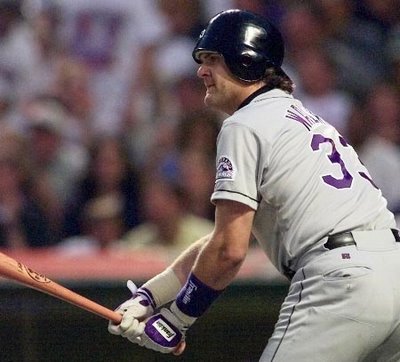
*Though not always.  While crunching numbers for this, I discovered that Larry Walker had hit .280/.383/.514 in his time in Colorado, spanning nine and a half years, and that after leaving, he proceeded to hit .286/.387/.520 as a Cardinal over the next year and a half.  Not that this constitutes a "poor" performance by any stretch, only one that was amazingly consistent with his road splits.  Usually it's not this easy.  


Most players end up somewhere between their road and home numbers, though generally closer to the road ones.  Rob Neyer once referred to this as a "polar bear effect", wherein Rockies hitters essentially wind up adapting to Coors Field so well - like a polar bear, uniquely adept at thriving in one particular environment - that they're no longer all that good at hitting at lower altitudes.  The difference is that hitters seem to re-adapt to sea level when they get back there, eventually.  Arlington is not so severe a hitter's environment as Coors Field, but maybe there's a similar effect.  Maybe opposing pitchers wilt in the Texas Summer heat but find their groove when they get back home? 

Additionally, if the discussion in the new book Scorecasting is to be believed, everyone hits better at home.  The umpires, whether they know it or not, are on Mike Young's side when he's in Texas, giving him fewer called strikes, more called balls, more benefits of the doubt on safe/out calls, and etc.  Virtually every year, the major leagues as a whole hit about 30-40 OPS points better at home than on the road, almost entirely for this reason, so why should Michael Young be any different?

None of this is to say that the Jeter contract was a good idea, or that performance statistics should be the only deciding factor in whether or not a player gets re-signed (and for how much), only that it can sometimes be interesting and/or instructive to compare players who have similar - if slightly hidden - resumes.

Generally speaking I think the Yankees will end up regretting this contract by the time it's half over.  Shortstops simply don't tend to remain shortstops when they get to be nearly 40 years old, even great ones like Cal Ripken, and certainly not mediocre (at best) defensive shortstops like Jeter.  Except that the Yankees don't have any place else to put him.

They're not going to make Jeter a third baseman, as Texas did with young when Elvis Andrus was promoted.  Alex Rodriguez is over there and is signed through 2017.  They're not going to move Jeter to first, where Mark Teixeira is signed through 2016.  And unlike Texas, New York has a serviceable DH, their former catcher, Jorge Posada, who's signed through 2011 and making a shade over $13 million.


They may be thinking that they'll have to cut Jorge loose after 2011, especially if his offense dips any further.  His OPS has already fallen in each of his last two full seasons from a high of 970 in 2007 down to 811 last year.  He'll be 39 this season and won't be adding much to the team if he hits any worse than he did in 2010.  American League designated hitters averaged .252/.332/.425 last year, while Jorge hit .248/.357/.454, only marginally above average.

Jorge's retirement or departure as a free agent would enable them to slot Jeter in as a DH for the remaining two years (three if he exercises the 2014 player option) of his contract. Of course, that too would require some improvement.  As a shortstop, Jeter's 710 OPS in 2010 was still a tick or two above the AL average (669) but it would be well below the 758 OPS that Junior Circuit Designated Hitters average.

If he can perform at something closer to his career level of 837, it could work, and that's not necessarily impossible.  He hit only .307 when he put the ball in play last year, well below his  career average of about .356, so if that was just a fluke and not an  indication of declining skill, we should see a significant bounce in his  batting average and therefore in all his other numbers. 

Baseball Prospectus has him pegged to hit .282/.348/.386 while Bill James is a little more optimistic, projecting .295/.365/.410.  Tom Tango's Marcel system splits the difference: .283/.350/.397, shading to the cautious side.  Those are all somehow based on the averages of players' performances who were similar to Jeter at a similar stage in their careers, but then Jeter is nothing if not unique, or at least, atypical.

Two years ago he nailed his PECOTA projection almost exactly, hitting .300/.363/.408 when his projection said .297/.365/.407, but then in 2009 he blew his projection (.288/.353/.383, six homers) out of the water with a sterling season, hitting .334 with 18 homers and 30 steals.  Would any of us really be all that surprised if Jeter hit .315 this year with 15 homers? Not really.  His Clutchness has spent the better part of the last two decades surprising us.  

Of course if the Yankees to slot Jeter into the DH spot, they'll then need a shortstop, but that's a problem for next winter. 


Stumble Upon Toolbar

16 February 2011

Cardinals Don't Need to Sign Pujols Now

There's never been a player quite like Albert Pujols, and so it stands to reason that there probably has never been a contract negotiation like the one going on now in the St. Louis Cardinals' spring training camp in Jupiter, Florida.  Pujols' contract option for 2011 was exercised by the Cardinals last October, so they're set for this year, but after that Pujols can become a free agent.

He's already stated that he won't negotiate a contract during the 2011 season and he's already extended the deadline to come to some agreement once, with the second deadline to be Wednesday at noon.  The Cardinals, of course, would like nothing more than to keep the best player in baseball, but given the literally historic nature of his talent, the Cards are likely to end up paying historic dollars - maybe $300 million or more - for the second half of his career.


But paying a player for the second half of his career and expecting the kind of production you saw in his youth is often a losing proposition.  To wit, we need look no further than the list of similar players (based on Bill James' Similarity Scores) on Baseball-reference.com:

  1. Albert Belle (848)
  2. Hank Greenberg (847) *
  3. Johnny Mize (826) *
  4. Juan Gonzalez (817)
  5. Larry Walker (805)
  6. Lance Berkman (803)
  7. Jim Edmonds (802)
  8. Chuck Klein (801) *
  9. Todd Helton (800)
  10. Jason Giambi (798) 
 Those stars mean that the player is in the Hall of Fame, and it's worth noting that several others on that list might still become Hall of Famers someday.  It's also worth noting, however, that Belle was out of baseball after his age 33 season, a victim of a degenerative hip condition that prevented him from playing without alleviating the Orioles from having to pay for the remaining three years and $35 million on his 5-year contract.

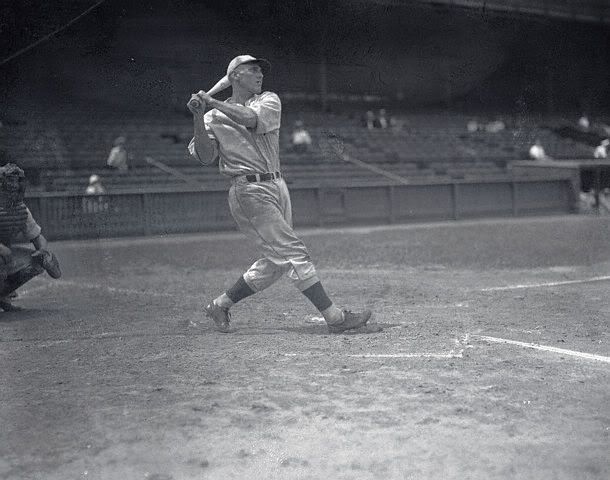
It's also worth noting that few of these guys would have provided anything close to fair value if they had received a contract consummate with their talents at age 30, as Pujols expects to get.  Greenberg retired after his age 36 season.  Mize was no longer a regular after age 35.  Gonzalez had his last productive, healthy season at 31.  Walker was a shell of his former self at age 36, a part time player by age 37 and retired at age 39.  Klein was washed up at 33, but played several more years as a part timer.


Berkman is 34 and looks like he's nearing the end.  Helton is playing regularly still, but is averaging about half as many homers and RBIs per season since he turned 31.  Giambi had some good years in New York, but only one anywhere near as good as his last few in Oakland, and that was at age 32, when he first arrived.  He missed halves of two different seasons to injuries and has struggled to remain employed as a bench player for the last two years.


The list of most similar players by age is not much more encouraging:
  1. Jimmie Foxx (863) *
  2. Frank Robinson (845) *
  3. Ken Griffey (840)
  4. Lou Gehrig (839) *
  5. Hank Aaron (839) *
  6. Mickey Mantle (821) *
  7. Mel Ott (800) *
  8. Juan Gonzalez (763)
  9. Eddie Mathews (751) *
  10. Manny Ramirez (744)
 Now we've got seven Hall of Famers, and presumably Griffey will someday make eight.  the other two would likely be in the Hall as well someday if not for the taint of PEDs, but in any case, the numbers are there.  But again, the picture looks kind of bleak when you start trying to justify something like a ten-year contract starting at age 32.

Foxx was washed up at 34.  Mantle? As famous for his injuries as for his prodigious skills, his career started unraveling after age 32.  Griffey had exactly one season in which he amassed at least 600 plate appearances after age 30.  Gehrig was forced to retire due to failing health at age 36 and was dead a year later.  Ott and Mathews were both done around age 36.  

Only Robinson, Aaron and Manny Ramirez offer glints of hope, and even they need to be taken with a grain of salt.  Manny Being Manny has been being pretty productive when he's played, but he hasn't played more than 104 games in a season since age 36.  Hank was still hammerin' at age 42, and was wonderfully productive in his 30's, but even he saw a drop off in his fourth decade.  He went from a 162 OPS+ in his 30's to a 107 OPS+ in his 40's, and averaged 35 fewer games per season.


Robinson was also very good through his mid 30's - better than the raw numbers would have you believe - but his playing time dropped off precipitously at age 38.  If Albert's contract goes into his 40's, as Alex Rodriguez' contract does and as has been speculated will be the case, the Cards are bound to get burned.

With all that said, it's worth noting also that Albert is unlike most of the men we've mentioned.  He's not seeing significantly inflated numbers because of the era or the parks in which he plays, as was the case with Klein, Walker, Foxx, Ott, and Helton.  He's not already injury prone like Mantle or Juan Gone, and he isn't likely to come down with some bizarre, career-ending ailment like Belle or Gehrig. Of course, neither were they until it actually happened. 

Well, on the other hand he has had some issues with a bad throwing elbow, which he opted to treat with a nerve transportation rather than Tommy John surgery two winters ago, so theoretically that could show up at any time.  But even that should - I repeat: should - only keep Pujols out for about one season if it proves necessary.  The Cards can still get their money's worth even if they get only nine of the ten seasons for which they're paying (or seven of eight, or whatever).

The real issue, as was the case with the Jayson Werth signing, is whether the Cards will get fair value for their dollars.  If they sign him to, say, a 10-year, $300 million contract, can they expect to get burned?   If you start with the value of a WAR (a Win Above Replacement) at about $4 million (according to FanGraphs.com), and then use 5% inflation for each of 10 years starting in 2012, you end up with a rate of about $6.9 million per win by 2021.

That sounds ridiculous and almost certainly won't be the case, but then 10 years ago the value of a Win was something like half of what it is now, and I wouldn't have believed then that it could rise so much as it has, so I suppose anything's possible.  This gives us an "average" cost per win of about $5.5 million over the life of the supposed 10 year contract.  So, if the Cardinals pay him $300 million over that span, he'll need to somehow accrue about 54 Wins Above Replacement over that time. 

There have been only four players in the history of professional baseball who managed to amass 54 or more WAR between the ages of 32 and 41, and you know each of them by one name: Barry, Willie, Babe and Honus, and one of those probably owes a lot of that success to "better living through chemistry", if you get my drift.


Three others, Hank Aaron, Cap Anson and Tris Speaker, earned a little over 50 WAR in that span, and three others more had at least 45.  Those include Ty Cobb, Edgar Martinez and Ted Williams, who almost certainly would have been in the 54 WAR+ group if he hadn't spent most of his age 32 and 33 seasons flying bombers over North Korea.


So that gives us four guys, Ted Williams, Babe Ruth, Willie Mays and Honus Wagner.  Four guys in the history of baseball, in which about 17,500 players have spent at least one day in the majors, and about 4,500 have spent at least one day there between the ages of 32 and 41.  Pujols has a better chance of being hit by lighting at some point in his life than he does of living up to such a contract.

But of course Albert Pujols has already defied the odds.  He won the Rookie of the Year award at age 21, in his debut season, something only a handful of others had done.  He's one of only 10 players in history with 3 or more MVP Awards.  He's one of only about a dozen guys in history who have finished in the top 10 in the MVP voting at least ten times, and he's the only one to ever do it 10 years in a row.

How good is Albert Pujols?  His wors season was 2002, his second in the majors.  Pujols' "Sophomore Slump"gave him an average line of .314/.394/.561, along with 34 homers, 118 runs and 127 RBIs. That was the first and only time he didn't get on base at least 40% of the time in any season, and his work was good for 5.8 WAR, according to Baseball-reference.com.

That was his worst season. 

There are, by my count, 23 Hall of Fame position players who never had a season that good.  Granted, that list includes a lot of questionable Veterans committee selections and/or guys who were known predominantly for their defense, like Bill Mazeroski, Rabbit Maranville and George Kell, but it also includes prolific hitters like Sam Rice, Jim Bottomley, Lou Brock and Pie Traynor.  ANother 19 Hall of Famers have only one season as good as Pujols' worst, including Monte Irvin, Enos Slaughter, Mickey Cochrane and Dave Winfield.

Jim Rice, Zach Wheat, Sam Thompson, Roy Campanella and a dozen others had only two such seasons.  First-ballot guys Tony Gwynn, Eddie Murray and Willie Stargell fall in with a group of 17 who had only three such seasons.  You see where this is going.  In fact, of the 134 Hall of Famers elected as position players, 118 of them don't have 10 seasons as good as Pujols' worst year. 


So it's possible, though I dare not say likely, that Pujols will continue to defy the odds and actually live up to such an incredible contract.  Projections that far out are all but impossible to make.  Baseball Prospectus, who's about as good at this on a year to year basis as anybody out there, shows Pujols in 2019 hitting .306/.409/.554 - but in only 301 plate appearances.  Don't you think that if you had a 39-year old who could hit like that, you'd find a way to get him into the lineup more than every other game?  Yeah, me too. 


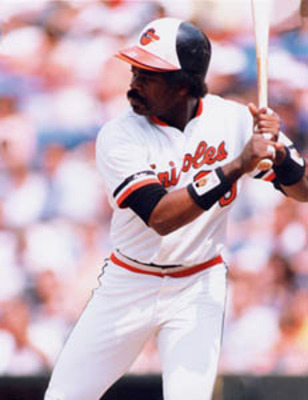
But even if he does produce enough over the life of the contract, the likelihood of him still being even a productive player, much less a superstar, at age 41 is pretty low.  Barry Bonds, for example, racked up enough WAR in his 30's that even with a lost season at age 40 and reduced playing time at age 41, he still would have made the contract a bargain.  Ditto for Babe Ruth, who played only a handful of games at age 40 and none at all at 41, but was so good from 32-39 that the team would easily have made its money back on a contract like this one.

But those are the exceptions, not the rule, and anyway, getting enough value overall is not the only concern.  Having an albatross of a contract around a franchise's collective neck is going to be a real problem if Pujols gets hurt or even if he becomes gradually less productive, like everyone else who's ever played major league baseball.  Few things tend to jade a fan base like knowing that the team is throwing money away on an unproductive player.  Even if he wins the MVP five more times in the next eight years, getting stuck with two years on the end of the contract during which Pujols will earn $50 or $60 million and not do much will sour a lot of folks on both him and the team, and more important, may hamper the team's ability to field a competitive roster. 

Therefore, the Cards would do well to limit the length to, say, seven or eight years instead of 10, if at all possible.  That might require them to go up a little in average salary, but it could be worth it to avoid having to pay the man $25 or $30 million to ride the bench in 2020.

Better yet, though, they should wait.  Pujols is under contract for 2011, and what's the worst that could happen?  he wins another MVP award, and now they have to re-sign a 4-time MVP award winner rather than a 3-time winner.  Maybe now it's $32 million per instead of $30.  Big deal.  But if he gets hurt or something, and they're on the hook for $300 million?  Well, that would be disastrous.  Or if he plays, but shows some signs of decline, at least they have a leg to stand on in the negotiations, a way to justify not paying him quite so many millions for quite so many years. 

Additionally, other teams will suddenly have a reason to be wary of signing him away from St. Louis. They're already at the top of the market for this player.  He's as valuable as he's ever going to be, so why buy now?  He'll have just as much reason to stay in St. Louis next winter as he does now, maybe more if they make a run or win another World Series or something. 

So, my advice is: Wait. 


Stumble Upon Toolbar